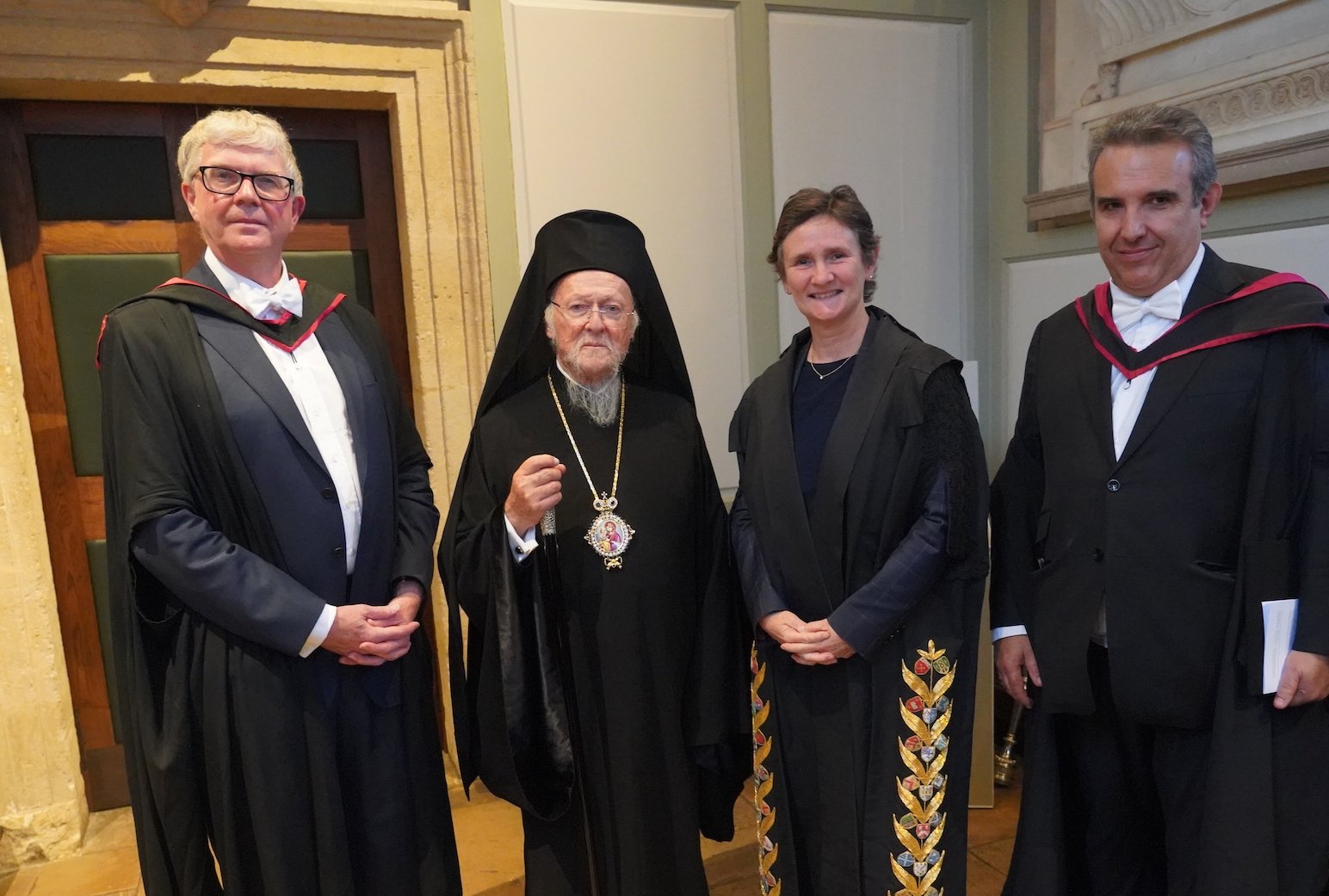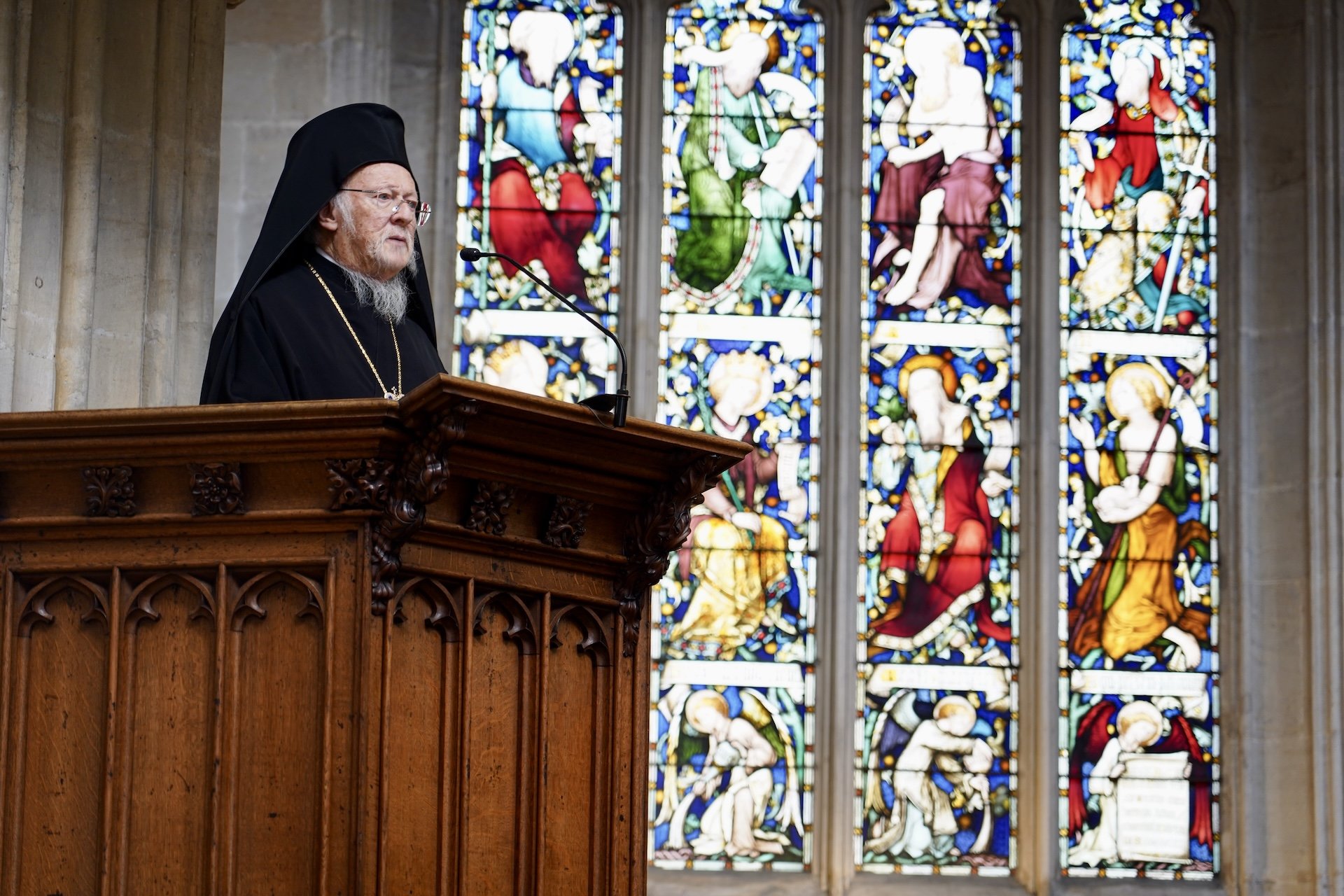
The Archbishop of Constantinople – Ecumenical Patriarch Bartholomew I – addressed the University Church of St Mary the Virgin in Oxford on Thursday 17 September 2026 during a week-long trip that also saw him visit King Charles at Balmoral.
The Patriarch, known for his environmentalism and inter-faith work, is the leader of 300 million orthodox Christians worldwide.
His address, Religious Liberty in Contested Ecosystems: Law, Religion and Foreign Policy in a New International Order, touched on the issues of universal religious liberty, faith as a pillar of democracy and how religious institutions are crucial, non-partisan actors in a fracturing international order.
Earlier in the day he had taken part in a discussion about human rights and religious freedom at the Centre for Law and Religion at the University of Oxford.
The lecture was delivered in the presence of Professor Irene Tracey, the Vice-Chancellor, the Proctors of the University, Heads of Houses, as well as ecumenical dignitaries. The Patriarch spoke about how social justice, human rights and ecological protection are interconnected and cannot be separated from humanity’s relationship with God.
The Revd Canon Dr Will Lamb, Vicar of the University Church, said: 'This was a major event hosted by the Centre for Law and Religion at Regent's Park College in the University of Oxford. We were delighted to welcome the Ecumenical Patriarch to the University Church. His commitment to human rights, ecumenical relations and interfaith dialogue in the course of his long and distinguished ministry is a powerful witness to the dignity of every human being, which Christians believe is revealed fully in the person of Jesus Christ.'
At the end of the lecture, the Patriarch gave a blessing to mark the beginning of the academic year. This service of blessing recalled the words of Metropolitan Kallistos Ware, who was a Fellow of Pembroke College, Oxford: 'As a place for the cultivation of wonder and the pursuit of truth, the University is equally a place for the cultivation of freedom. Wonder and freedom, truth and freedom – these things are essentially linked. Wonder can be evoked but not compelled; and truth, as Christ observed, makes us free (John 8:32). In any university it is our task to bear witness to the value of freedom, and to resist all that erodes or diminishes our liberty. If I am asked by my students at Oxford, “What are you trying to teach us here?” then perhaps my best answer is to say no more than this: “We want you to learn to be free”.'
Photographs are copyright: Nikos Papachristou