The Bampton Lectures, founded by the will of the Revd John Bampton (1690-1751), first took place at the University Church in 1780. Over the centuries, these prestigious lectures, sometimes courting controversy, always intellectually stimulating, have covered a range of theological subjects. It is a condition of the Bampton Bequest that the lectures are published by the Lecturer. These lectures are delivered every year.
UNFORTUNATELY, DUE TO UNEXPECTED CIRCUMSTANCES, THE BAMPTON LECTURES 2026 HAVE BEEN POSTPONED.
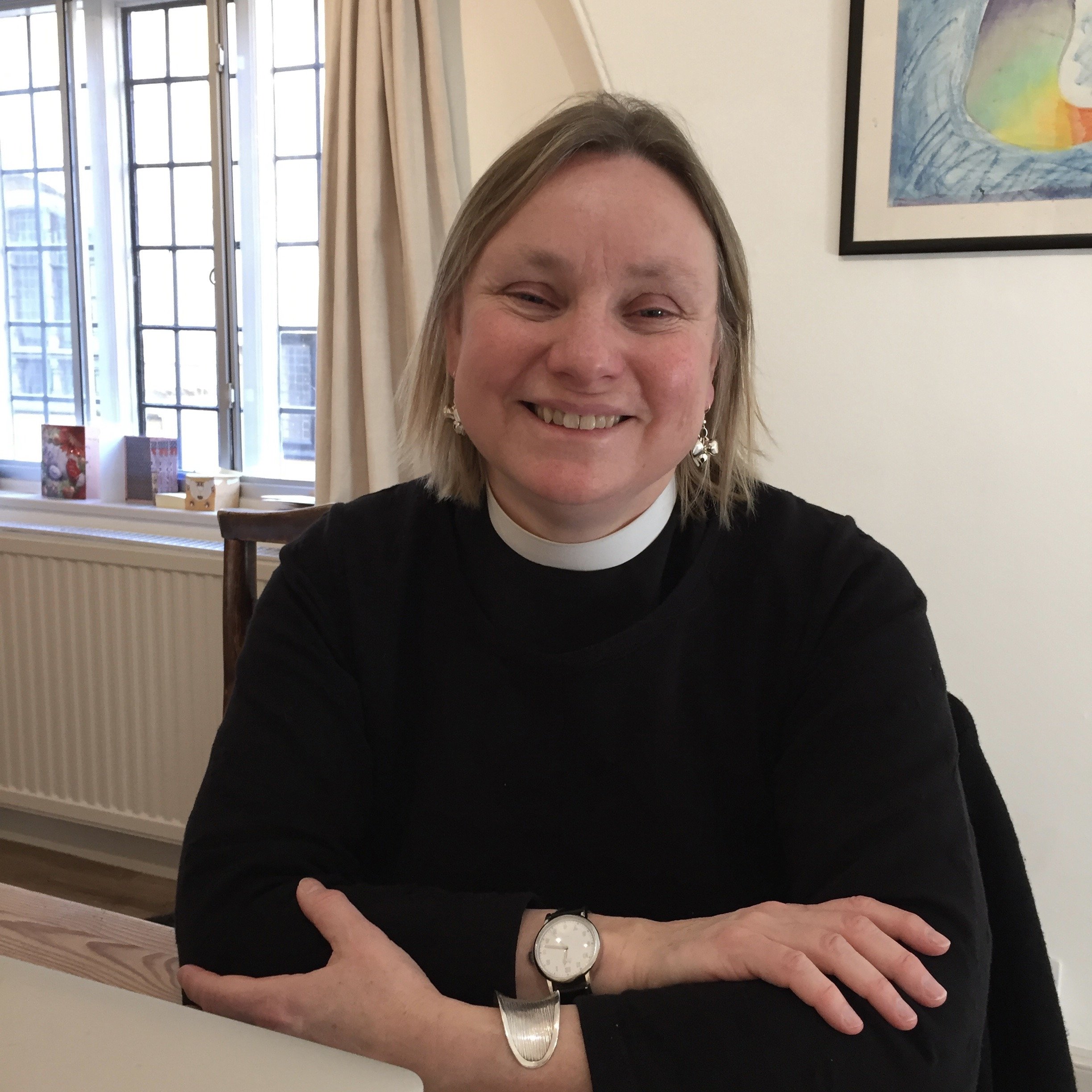
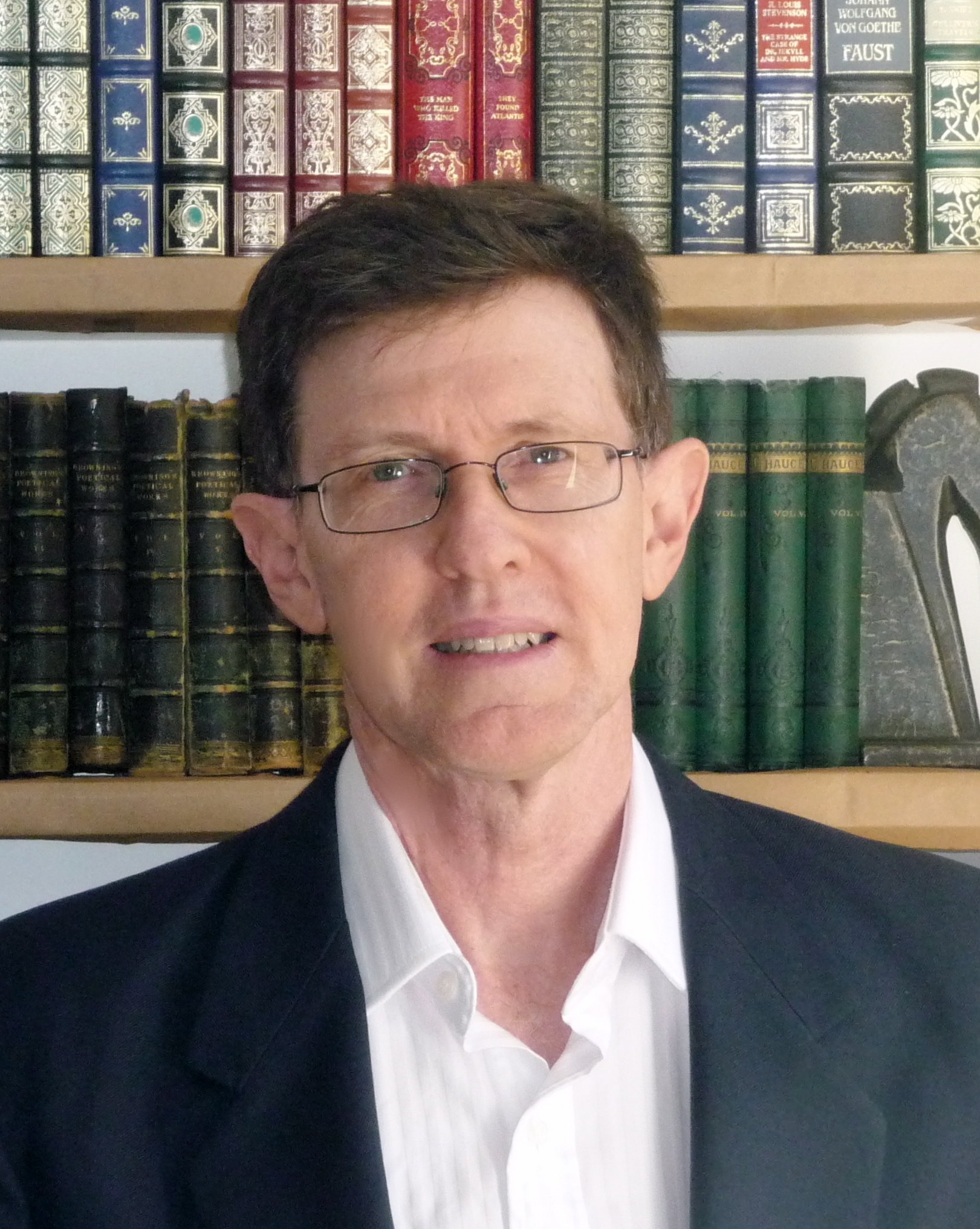
In these lectures, Professor Janet Martin Soskice will argue that the Christian doctrine of creation has been neglected to damaging effect. Counter to a tide of criticisms, Professor Soskice will suggest that, if we begin with a robust account the doctrine of Creation and unfold the mystery of the Divine economy from there, Christianity is both more plausible and more interesting than popular accounts might suggest – in short, gone is the so-called ‘disenchanted universe’ and you can believe in angels, the resurrection of the dead, miracles and all kinds of things you believed anyway but felt sheepish for doing do. A weak protology (account of beginnings) leads to a weak eschatology and, after a first lecture asking whether we have forgotten God, the Creator, the second lecture is on the resurrection of the body (our bodies), the third on what it is to ‘be in Christ’, especially in Paul’s theology and how this relates to participation and deification, and the final lecture on what ‘beginning with creation’ might mean for a cosmic Christology and God’s love for all creatures.
About the lecturer
The Bampton Lecturer for 2026 is Professor Janet Martin Soskice. Dr Soskice is Professor Emerita of Philosophical Theology, University of Cambridge, and Fellow Emerita, Jesus College, Cambridge, where she served for 30 years. She is currently the William K. Warren Distinguished Research Professor of Catholic Theology at Duke University.
A Roman Catholic theologian, Dr Soskice’s work lies at the intersection of Christian theology and philosophy. She has been particularly interested in questions of method and the Doctrine of God: religious language, metaphysics and epistemology, narrative and genre, doctrine of creation, women and religion, beauty and western art, science and religion, and theological writing. Her present large project, bringing almost all of these together, is on “Naming God.” Her books include Metaphor and Religious Language (Oxford, 1984); The Kindness of God (Oxford, 2007); joint editor of Creation and the God of Abraham (Cambridge, 2010); and Naming God: Addressing the Divine in Philosophy, Theology and Scripture (Cambridge, 2023). Her book Sisters of Sinai: How Two Lady Adventurers Discovered the Lost Gospels (London: Chatto and New York: Knopf, 2009) was read as Book of the Week on BBC Radio 4 and was in the “Best Book of the Year” lists of The Washington Post and The Christian Science Monitor. Dr Soskice is a past president of both the Catholic Theological Association of Great Britain and the Society for the Study of Theology, and has been a Eugene McCarthy Visiting Professor at the Gregorian University in Rome and president of the Cambridge University Catholic Association. She is a member of the English and Welsh Anglican/ Roman Catholic Committee and takes part in Christian/Muslim dialogue.
Have we forgotten God the Creator?
Believing in the Resurrection of the Body
Being the Body of Christ
The Cross as the Tree of Life
2025: Wading in the Word: Womanist Biblical Interpretation
Image
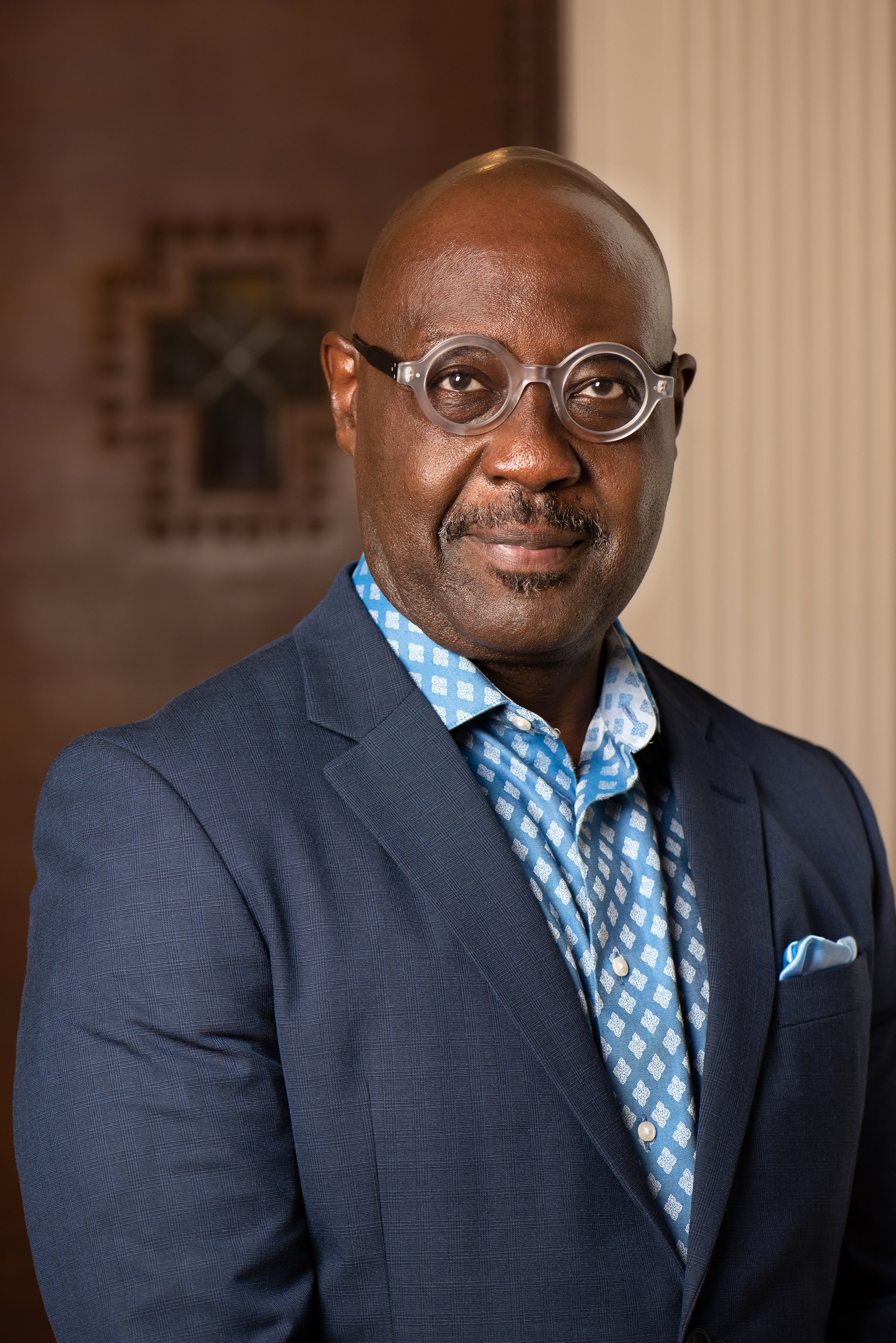
The Rev. Dr. Wil Gafney, Ph.D. is a biblical scholar whose work focuses on translation of the scriptures for congregations and lay readers, womanist and feminist biblical interpretation and, women who prophesied in ancient Israel and the ancient Afro-Asiatic world and, their reception in rabbinic literature. She is the Right Rev. Sam B. Hulsey Professor of Hebrew Bible at Brite Divinity School in Fort Worth, Texas. She is the author of A Women’s Lectionary for the Whole Church Years A, B and C and a novel Year W (a stand-alone volume) and, translator of its biblical selections. She is the author of Womanist Midrash: A Reintroduction to Women of the Torah and of the Throne and its sequel, Womanist Midrash: A Reintroduction to Women of Joshua Judges, Samuel and Kings along with a commentary on Nahum, Habakkuk, and Zephaniah in the Wisdom series and, Daughters of Miriam: Women Prophets in Ancient Israel. She co-edited The Peoples’ Bible and The Peoples’ Companion to the Bible.
Dr. Gafney is an Episcopal priest canonically resident in the Diocese of Pennsylvania and licensed in the Diocese of Texas and, a former Army chaplain and congregational pastor in the AME Zion Church. A former member of the Dorshei Derekh Reconstructionist Minyan of the Germantown Jewish Center in Philadelphia, she has co-taught courses with and for the Reconstructionist Rabbinical Seminary in Wyncote, PA. Her lectures and sermons are widely sought after in academic and Jewish and Christian congregational spaces in the US and in the UK. She is a public facing religious scholar, preacher, teacher, activist and, an amateur watercolorist.
Crystal Clear Until You Look: The Waters of Translation Tuesday 20 May at 10.00am at the University Church
Original biblical translation is a regularly occurring feature of biblical scholarship, but it frequently appears without any reflection (even when it appears with volumes of voluminous footnotes). This lecture considers the in invisibility of translation to many if not most readers in Christian traditions.
Getting our Feet Wet: Close Reading with Womanist Eyes Tuesday 20 May at 11.30am at the University Church
Womanist is a noun referring to bodies of knowledge, ways of reading, and larger intellectual frameworks rooted in the perceptions, experiences and knowledge of black women – including ancestral and academic knowledge and, cultural knowledge, folk knowledge, motherwit and the women’s ways of black women. This lecture will offer a close reading of a biblical text utilizing the methodology that characterize the approach known as “womanist midrash.”
A World Beneath the Waves: Womanist Midrash Tuesday 27 May at 10.00am at the University Church
The two volumes of Womanist Midrash employ translation-based exegesis in conversation with classical rabbinic midrash and the homiletic of the sanctified imagination in black preaching. This lecture will present readings from each volume of the series focusing on the contemporary midrashic elements and delineate the ways in which they put flesh on the bones of the biblical text.
Take Me to the Water: A Women's Lectionary for the Whole Church Tuesday 27 May at 11.30am at the University Church
“What would it look like if women built a lectionary focusing on women’s stories?” This lecture will discuss the origin and development of A Women's Lectionary for the Whole Church, providing some sample readings.
2024: Recognizing Strangers: Solidarity and Christian Ethics
Image
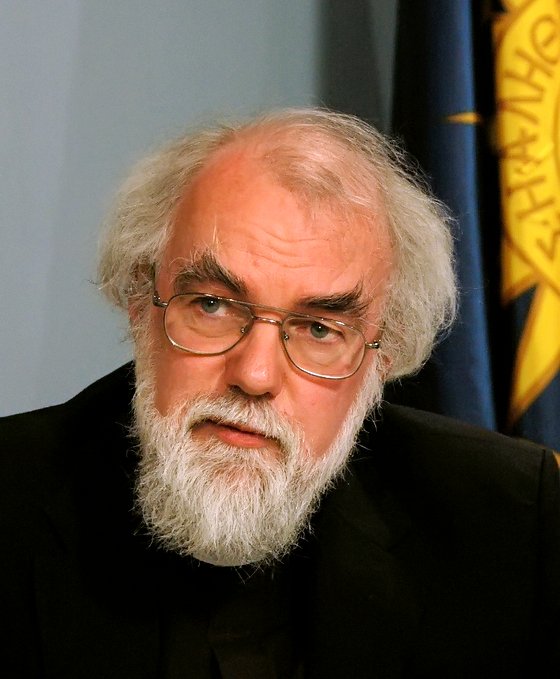
This year the Bampton Lectures will be given by the Rt Revd Dr Rowan Williams PC, FBA, FRSL, FLSW. A former Archbishop of Canterbury and Archbishop of Wales, Rowan Williams has written extensively on faith in the public square. In these lectures, Dr Williams will return to the theme of solidarity, exploring its roots in Catholic Social Thought and exploring how a solidarity-shaped ethic might serve to address some of the issues at the heart of our public life.
The lectures will take place on Tuesday 27 February and Tuesday 5 March 2024. For graduate students, there will be an additional seminar to discuss the themes of the lectures. Further details are available from the Faculty of Theology and Religion.
Creating an Ideal: Solidarity and Catholic Social Thought Tuesday 27 February at 10.00am at the University Church
Solidarity emerges as a distinctive theme in twentieth century Catholic social thought, absorbing a number of earlier formulations. The prominence of the term in Polish politics of the 1980's helped to reinforce its significance and it continues to be a focal idea. This lecture traces some of the developments in its use and the definitions it has received in official teaching.
An Ambivalent Ideal: Challenges to an Ethic of Solidarity Tuesday 27 February at 11.30am at the University Church
Does the ideal presuppose too smoothly convergent an idea of social interests? How is actual conflict of interest negotiated in this framework? The lecture will examine critiques of some aspects of a solidarity-shaped ethic from various writers, including Kenneth Leech and Gillian Rose, and will look at ways of clarifying the discourse around the subject to allow for a more critical and nuanced model.
Solidarity Against Tribalism: the Contemporary Challenge Tuesday 5 March at 10.00am at the University Church
A 'solidarity' model necessarily stands in opposition to political 'tribalism' and the fragmentation of the human good into diverse and competing programmes. Is it possible to pursue an ideal of solidarity that takes seriously the facts of 'intersectional' injustice and suffering without being trapped in an 'identity politics' that divides or paralyses the work of building a genuinely shared public space? The lecture argues the need for a radical theological foundation for any such aspiration by way of the exploration of understandings of human 'dignity'.
Solidarity, Rights and the Image of God: Ethics and Christian Anthropology Tuesday 5 March at 11.30am at the University Church
If the idea of human dignity rests, theologically speaking, on the divine image, the idea of human rights rests on the consideration of what is justly or properly due to that divine image. Ultimately, human solidarity is grounded in a shared and equal dependence, and a shared and equal claim to be seen in the light of God's reflection in the created world. This final lecture outlines a theology of human rights based on this model of responding 'fitly' or 'justly' to the claim of divine presence, and a theology of solidarity that interprets this in terms of the mutual assurance of goods or well-being or life-giving, so that a theological ethic of solidarity becomes ultimately an ethic shaped by the reality of the Body of Christ.
2023: Jesus and the Displaced: Christology and the Redemption of Habitation
Image
We are in a crisis of displacement that joins the problems of housing, homelessness, and forced migration to the horrors of white supremacy, patriarchy, and war. Our crisis of displacement – geographic, racial, social, and environmental – demands we consider both the body and the building, both the design and creation of subjects and built environments in their inextricable connection and relation. Taking the work of the great African American theologian and mystic Howard Washington Thurman in his famed text, Jesus and the Disinherited as inspiration and guide, these lectures outline a Christology aimed at redeeming habitation.
Thurman’s Jesus and the Disinherited was a Christological intervention into the ways fear, deception, and hate mangle the human spirit. Offering us a portrait of the life of Jesus and what he called the religion of Jesus, Thurman situated what would famously be called the love-ethic of Jesus as the central energy and reality that would rehabilitation the human spirit and redeem humanity. I will, following Thurman, return to Jesus, but now with his mother Mary to help us rethink the body and the building. In this regard, I will again consider these three realities - fear, deception, and hatred – but now in relation to the built environment and in relation to the fabrications of a self and the formation of subjectivity.
The Lectures will take place on Tuesday 23rd May 2023 and Tuesday 30th May 2023. They will also be live-streamed.
About the Lecturer
The Revd Dr Willie James Jennings is currently Associate Professor of Systematic Theology and Africana Studies at Yale University Divinity School. Dr. Jennings was born and raised in Grand Rapids, Michigan. Dr. Jennings received his B.A. in Religion and Theological Studies from Calvin College (1984), his M.Div. (Master of Divinity degree) from Fuller Theological Seminary in Pasadena California, and his Ph.D. degree from Duke University. Dr. Jennings who is a systematic theologian teaches in the areas of theology, black church and Africana studies, as well as post-colonial and race theory. Dr. Jennings is the author of The Christian Imagination: Theology and the Origins of Race published by Yale University Press. It is one of the most important books in theology written in the last 25 years and is now a standard text read in colleges, seminaries, and universities. Dr. Jennings is also the recipient of the 2015 Grawemeyer Award in Religion for his groundbreaking work on race and Christianity. Dr. Jennings recently authored commentary on the Book of Acts won the Reference Book of the Year Award, from The Academy of Parish Clergy. He is also the author of After Whiteness: An Education in Belonging, which is the inaugural book in the much anticipated book series, Theological Education between the Times, and has already become an instant classic, winning the 2020 book of the year award from Publisher’s Weekly, and being selected as a finalist for the 2021 American Academy of Religion Book of the Year in the Constructive- Reflective Studies category. And now Dr. Jennings is hard at work on a book on the doctrine of creation, tentatively entitled, “Reframing the World.”
In addition to being a frequent lecturer at colleges, universities, and seminaries, Dr. Jennings is also a regular workshop leader at pastor conferences. He is also a consultant for the Wabash Center for Teaching and Learning in Theology and Religion, and for the Association of Theological Schools. He served along with his wife, the Reverend Joanne L. Browne Jennings as associate ministers at the Mount Level Baptist Church in Durham, North Carolina, and for many years, they served together as interim pastors for several Presbyterian and Baptist churches in North Carolina. They are the parents of two wonderful daughters, Njeri and Safiya Jennings.
Mary, Jesus, and the Dwelling Condition: An Interpretation
Tuesday 23 May at 10.00am in the University Church
This lecture considers Jesus as a place of dwelling where we are invited to participate in redeeming construction. Jesus becomes the place where building, the body, and design may be rethought in the light of his life and ministry, drawing us toward envisioning a kind of freedom that always aims at building life together in ways that allow the earth to speak through us of God’s glory. In this regard, I will imagine the instructing life of Mary, considering the significance of Mary as not only theotokos, but also pedagogue of God. Mary is the one who guides Jesus in what it means to dwell, that is, she is the one who teaches Jesus of life in the land and how to allow the earth to speak through him. By taking seriously Jesus as both the voice of God and the one who gives voice to the land, I will situate new life-giving possibilities for the body and building against its three adversarial conditions, fear, deception (delusion), and hatred.
Deconstructing the Fearful Condition
Tuesday 23 May at 11.30am at the University Church
This lecture meditates on the problem of fear as both currency and virus enhanced by the structures of the build environment. What does it mean to have fear built into the built environment? I posit an answer to this question by drawing a connection between a fearing or fearful body and forms and configurations of fear designed into place. How might we reconfigure place to welcome the stranger, refuse the anticipation of hostility, and draw the body into new practices of hospitality that work themselves down to the ground? Turning again to the life of Jesus, especially the events following his resurrection, I outline the work of draining fear from place.
Overcoming the Delusion Condition of Home Ownership
Tuesday 30 May at 10.00am at the University Church
We have entered the delusion condition that we can individually or even as collectives own what belongs only to God, the creation. Modern colonialism forced upon us a new kind of possessive logic that mutated indigenous understandings of land and place possession. Rather than a vision of possession that means being possessed by land and animal and a place through which they speak through us resourcing our identities, the colonialists pressed the vision that first articulated possession of land and place as a commodity and thereby formed body and building inside that mutated vision of possession. Home ownership has become the site where the find the outworking of this mutation and with it visions of the self that breed narcissism, obsessive managerial logics, and various forms of chauvinism. This lecture considers the life of Jesus as an intervention into ownership precisely as a site of sharing. It is that reality of a shared life in Jesus that must work its way down into the dirt and out to the shape of ownership.
Addressing the Hateful Condition of the Line
Tuesday 30 May at 11.30am at the University Church
My final lecture returns to Thurman’s reflection on the love-ethic of Jesus but now to consider Jesus as a site of love and the ethical dimensions of that site for addressing the problem of the line, that is, the ways in which bordered, and boundary existence resources hate. Hatred is from the beginning an ancient characteristic of sin, yet the production of the line (property line, border line, prison line) all help to materialize hate in profound ways. Considering the redemptive character of Jesus’s peregrination, I want to rethink the relation of mobility to hospitality, and the ethical demand to transgress the line. Here I want to consider again the so-called great commission of Matthew 28, to go into the world and offer witness, making disciples of all nations which I will designate as garden disciples, disciples that learn to touch the earth and the peoples of the earth in ways that give witness to thriving life and shared living.
2022: The Age of Hitler, and how we can escape it
Image
The age of Hitler is not the 1930s and 1940s: it is our own lifetimes. It is the period in which Western culture has come to define its values not by Christianity, but by the narrative of the Second World War. It is the period in which our most potent moral figure has been Adolf Hitler, and in which our only truly fixed moral reference point has been our shared rejection of Nazism.
Which is good: but it’s not enough. And even if defining our values this way was wise, it’s clear that this postwar, anti-Nazi moral consensus is unravelling, and our whole system of values coming under pressure. What is going to come next? These lectures will give an account of how the ‘secular’ values of the postwar world came about, and what will happen now that the age of Hitler seems to be passing. They will show that for a new shared system of values to emerge from our current turmoil, we will need to draw creatively both on the newer, secular, anti-Nazi value system and on the older Christian value systems which remain powerfully present in European and Western culture. And they will show that such a creative synthesis is not only desirable, but also possible – perhaps even likely.
About the Lecturer
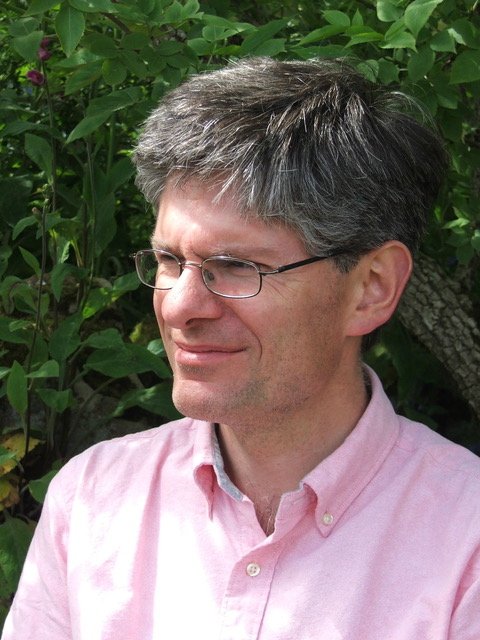
Professor Alec Ryrie FBA is Professor of the History of Christianity in the Department of Theology and Religion, University of Durham.
The Greatest Story Ever Told
Tuesday 10 May at 10.00am in the University Church
This lecture will trace the moral transition of British and certain other western cultures from the Victorian period to the 1960s: of how it was that the most potent moral figure in those cultures ceased to be Jesus Christ and came to be Adolf Hitler. The moral authority of Jesus and of Christian ethics was broadly accepted as normative even by agnostics or atheists in the late 19th and early 20th centuries, a moral authority that explains the insistent self-understanding of western societies in that era as ‘Christian’, for all their apparent secularisation. The lecture will consider how that value system fared during the era of the World Wars. In brief, it weathered the First World War and even the opening of the Second better than we might imagine; but the eventual moral impact of the Second World War and the accompanying global reordering left traditional Christian ethics looking wholly inadequate to the scale of the challenge, and indeed badly compromised by association with what now appeared as intolerable evils. Christian and non-Christian alike had their confidence in Christian values badly shaken. The lecture will end by considering how, in this context, the centuries-old concept of ‘human rights’ came into its own, quite suddenly appearing to be the self-evident, intuitive and secular truth on which a new age must be built. The experience and memory of the Second World War was fundamental to that widely-shared intuition. By the 1960s, despite the famous cinematic white elephant, the ‘greatest story’ in western culture was no longer the story of Jesus, but of the struggle against Nazism.
The Age of Hitler
Tuesday 10 May at 11.30am in the University Church
This lecture will show how, during the lifetime from the 1940s to the present, British, American and many European cultures have (in revealingly different ways) rebased their moral currency on the secular narrative of the anti-Nazi struggle. The story has played out differently in the Anglophone world and in formerly occupied Europe, and differently again in Germany’s far more painful and sophisticated reckoning with its past. And yet across the western world, the Second World War has become our Trojan War and our Paradise Lost: a shared cultural point of reference; the source of the only moral absolutes which pluralist societies recognise; a rich and complex set of events which have an unparalleled grip on our collective imaginations and emotions, and which we find ourselves perpetually retelling and reinventing (and, often, trivialising). In the Anglophone world, in particular, the war and its moral lessons have become pervasive in the fictional narratives on which generations of children have been raised, from Tolkien to Star Wars and Harry Potter. The practical foundation of post-1960s secularism is that we may still believe that God is good, but not with the same ironclad certainty with which we know that Nazism and all it stands for is evil.
The lecture will conclude by arguing that this western moral consensus is now unravelling. The war itself is falling off the edge of living memory; new crises are disrupting old certainties; a war between professedly Christian European powers no longer resonates so powerfully in plural societies and in a postcolonial world. Or perhaps it is simply that the inherent tensions of a value- system built on the anti-Nazi narrative can no longer be contained. In recent years it has become plain that our age’s moral consensus is fracturing, with old truisms being questioned and new ones being asserted. Even anti-Semitism, the old horror that the anti-Nazi era defined itself against, is re-emerging on both the Left and the Right. The postwar moral world is coming to an end: the question is what will come next.
Heroes and Villains
Tuesday 17 May at 10.00am in the University Church
For those of us who have grown up formed by its certainties, the fracturing of the postwar moral consensus is unnerving. This lecture will offer some cold comfort, by examining the weaknesses and inadequacies of the Second World War and of the mythology of anti-Nazism as a basis for our value systems. It will argue that for those weaknesses and inadequacies to be addressed, we will need to draw on deeper resources, which in the western world must mean principally theChristian moral frameworks that are still buried deep in our culture’s foundations. It remains to be seen whether this will be done well or badly.
The inadequacy of the Second World War as a basis for our ethics is not a matter merely of the moral messiness of the struggle itself (the Bengal famine, Dresden, Hiroshima); nor of the problematic lessons the war has taught us (the phobia of ‘appeasement’ almost annihilated the planet during the Cuban missile crisis). More fundamentally, the very fact of replacing a positive moral exemplar with a negative one has left us with a social consensus that knows what is evil but has no agreement on what is good, and indeed with a severely impoverished notion of the good. One result is a worsening shortage of those pragmatic moral lubricants, repentance and forgiveness. Another is an almost comical tendency, especially in Britain, to read complex problems, from the COVID pandemic to the climate emergency, through the lens of the Second World War – as if all true evils have villains at their heart. A third is a persistent inability to find a cultural place for religion, especially for religions that do not feel the need to emulate postwar European Christianity’s tamed social role. The lecture will argue that these inadequacies are amongst the reasons why our postwar value system is failing, and why we ought to be glad of the fact. It will also argue that, while Christianity cannot be the only set of moral resources drawn on to address these problems, it can and should play a distinctive and decisive part in doing so. And it will draw on examples from around the world that suggest this is already beginning to happen.
A Crossroads
Tuesday 17 May at 11.30am in the University Church
As the postwar moral era comes to an end, Christians find themselves divided as to how to respond. With the assertively secular values of the post-1960s era beginning to feel brittle, it is unsurprising that many Christians across the world have sensed an opportunity. The result is an acceleration of culture wars, with certain kinds of Christianity positioning themselves in opposition to particular forms of secular modernism. The instinct to turn back the clock and to return to the old certainties of Christendom’s value systems is very understandable. This final lecture will argue that it would nevertheless be a grave error; that even (or especially) doctrinally or socially conservative Christians ought to seek a constructive engagement with the anti-Nazi values of the postwar age, which are much less antagonistic to Christianity than their construction as ‘secular humanism’ suggests. This is partly because, in such a culture war, assertive Christendom-Christianity will lose. Indeed, it emboldens its secularist ‘enemies’ by giving them precisely the kind of opposition they crave. Yet this approach is flawed theologically as well as tactically, based as it is on a hollowed-out Christian identity politics as brittle as any secular alternative. The lecture will suggest some alternative, subtler ways in which Christians can engage with fracturing secular values, breathing life into those values’ inadequacies but while also learning from them. As numerous commentators involved in the revival of virtue ethics have suggested, deploying and modelling unfashionable but essential practices such as humility and repentance both makes it possible to learn the very hard-won moral lessons of the modern era, and to demonstrate that, essential as those lessons are, they are not enough. The lecture will conclude by pointing to signs of an emergent Christian politics, especially but not only in parts of the global South, which suggest that such a constructive synthesis between Christian and secular values is not only necessary, but already happening.
2021: Four-Dimensional Eucharist
Image
In these lectures, the Revd Canon Dr Jessica Martin presented a series of reflections on the Eucharist in four dimensions. Construing the eucharist both as sacrament and as ritual theatre, she considered its physicality in a time of increasing online presence, the abiding Christian tension between presence and absence it already contains, and its efficacy in a modern culture which veers unstably between scepticism and enchantment. With a wide range of reference, the lectures ranged from fantasy genres and virtual reality to Eucharistic theology and the anthropology of ritual.
The lecture series was structured by the metaphor of geometrical ‘dimensions’: from the point (or line) to the flat shape, to the three dimensions of situated theatre, to the layerings of personal and sacred time. These lectures were delivered on Tuesday 11 May and Tuesday 18 May 2021.
About the Lecturer
The Revd Canon Dr Jessica Martin has been Residentiary Canon for Learning and Outreach at Ely Cathedral since 2016, following six years as priest-in-charge of a multi-parish benefice in South Cambridgeshire. Before that, she was Fellow in English at Trinity College, Cambridge, where her research focus was on early modern piety and the early history of literary biography. Her most recent book is Holiness and Desire (2020), which considers the roots of human desire and the consequences of its modern commodification.
The Point of the Eucharist
A point situates perspective; it gives a focus. This lecture asks how the concept of ‘sacrament’ can work in a culture which may choose to strip symbols of their power on a more or less arbitrary basis. It goes on to ponder the story behind Eucharist as one which anticipates such stripping in the divine value it assigns to the weak, the broken and the doomed.
Flat Eucharist: Schemes and Screens
This session thinks about the different 2D modes and conventions upon which we rely for our access to the Eucharist. It considers the linear nature of ‘argument’ for making Eucharistic meaning, and its limitations. It looks at the conventions of written, printed liturgy, at how the technology of the page filters, orders and confines what happens. Informed by the recent experience of the pandemic, it discusses screened Eucharists as technologically-enabled representations which may - or may not - falter on the threshold between communion and its simulation.
The Eucharist as Theatre: Place and Space
This session thinks about ‘place’ as it plays out in a piece of ritual theatre constructed partly around absence – how vital physical gathering and genuine communal eating might (or might not) be for the realised Eucharistic drama of communal feast and remembered loss. It considers the ways that liturgy makes things happen, as an event in a particular space with particular performers. It asks how ‘real’ representation can become if we are physically absent from one another, and what influence the deniability of symbolic acts has on our ambivalent relationship to acts of communion.
The Eucharist in Time
This session asks about the nature of memory in Eucharistic action - not only in its bringing together of Jesus’s fleshly present with our own, but in the smaller and more particular meetings of personal past and present which happen for worshippers. It thinks about the meetings and partings, the presences and absences, of private lives and loves, which are part of the power of liturgical reiteration. It finishes by pondering what is different, and what the same, between the connections of love set up in non-eucharistic memorials or records of the vanished past and the relationship which Eucharistic liturgy establishes between loss and meeting.
2019: Rethinking Relations between Science and Religion
Image
The contemporary relations between science and religion are often thought of in terms of competing factual claims or ways of knowing—evolution vs creation, reason vs faith. On this understanding, apparent conflicts between science and religion are to be resolved by argument. But such arguments rarely turn out to be persuasive to those not already committed to their conclusions.
Professor Harrison's suggestion will be that this is because these arguments are not doing much real work, but are the outward expression of implicit commitments to narratives about science and religion that have a historical form: "The most common of these stories is the ‘conflict narrative’, which proposes an enduring historical conflict between science and religion. While historians have debunked this narrative, it still exercises a pervasive influence on science-religion discussions. Less commonly remarked upon is a ‘naturalism narrative’, according to which the successes of science have shown us that there is nothing in the universe but physical forces and entities. This narrative operates less by opposing specific arguments than by simply making traditional understandings of divine action unthinkable. In these lectures I will trace the historical emergence of these powerful narratives about science and religion, with a particular focus on the rise of modern naturalism. I will then turn to the specific ways in which these narratives have unhelpfully shaped contemporary arguments about divine action and purpose."
The lectures took place on 12th February and 19th February 2019. They were followed by seminars in the Old Library. The first seminar was on 'Evidence and Religious Belief' and the second seminar was on 'Divine Action in a Disenchanted World'.
About the Lecturer
Professor Peter Harrison is a past Andreas Idreos Professor of Science and Religion at the University of Oxford. He is now an Australian Laureate Fellow and Director of the Institute for Advanced Studies in the Humanities at the University of Queensland. He has written numerous books and articles on the historical and contemporary relations between science and religion. In 2011 he delivered the Gifford Lectures at the University of Edinburgh, now published as The Territories of Science and Religion (2015). His most recent book is Narratives of Secularization (2017).
Supernatural Belief in a Secular Age
Science and the Disenchantment of Nature
Nature and the Idea of the Supernatural
Religious Belief and the Myth of Scientific Naturalism