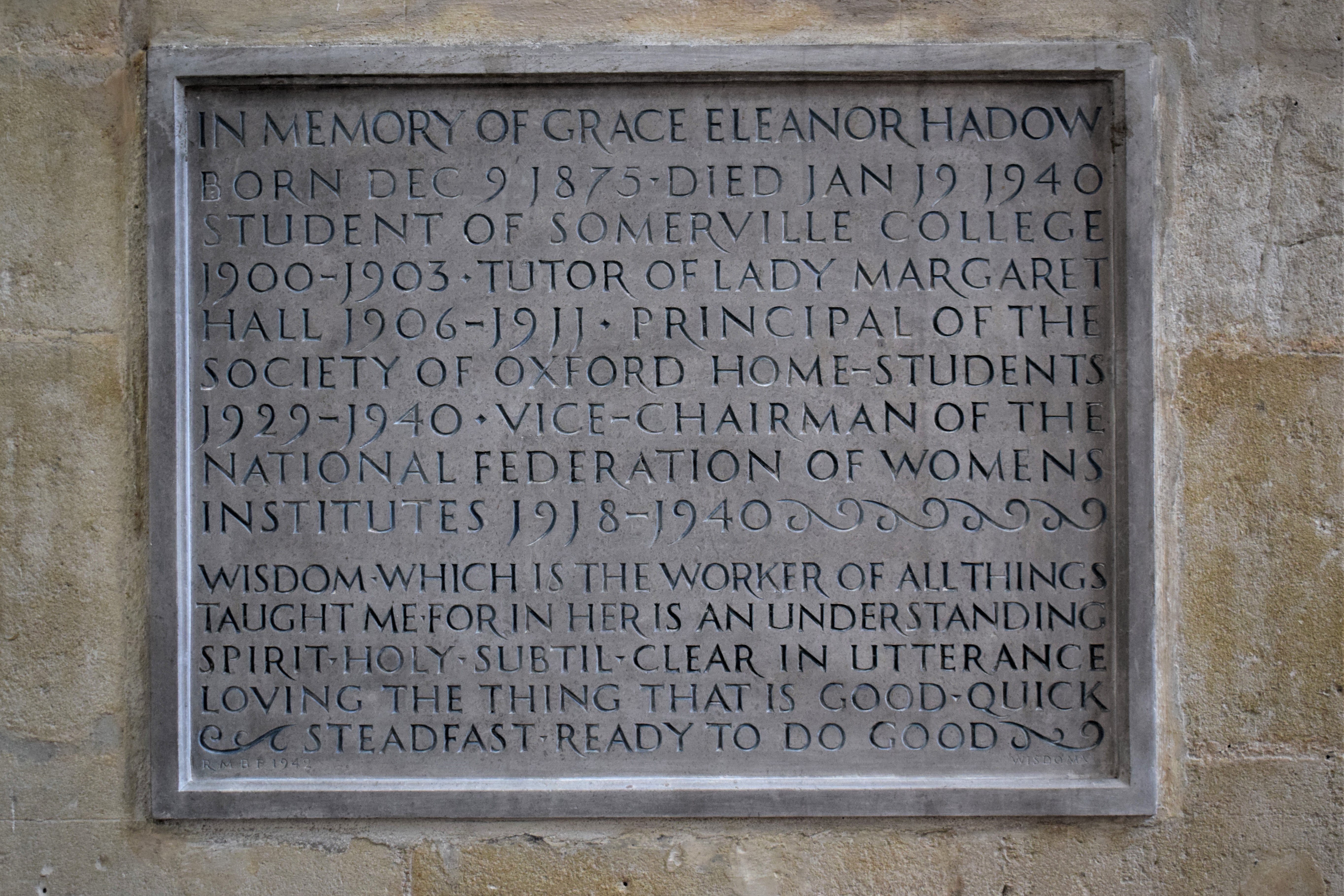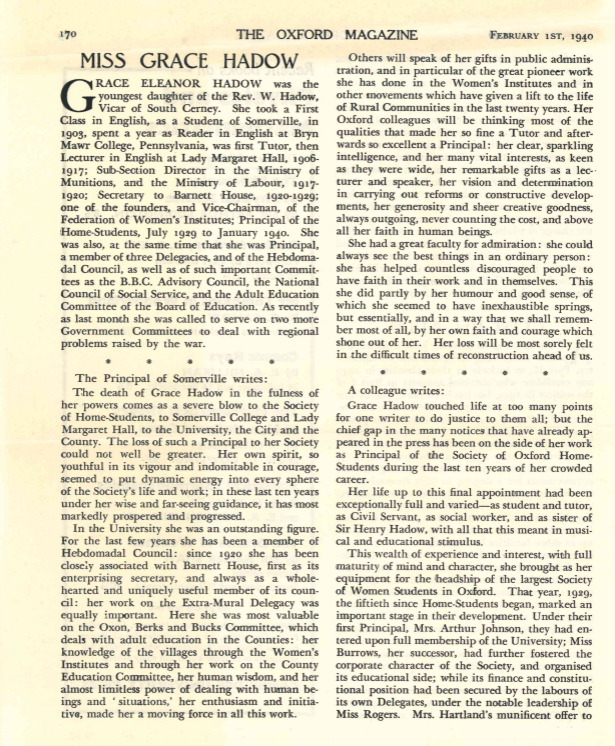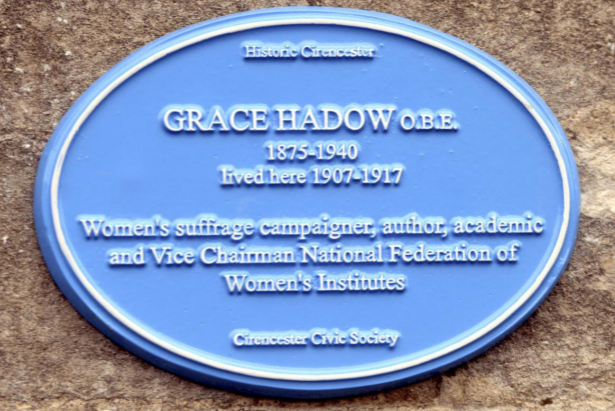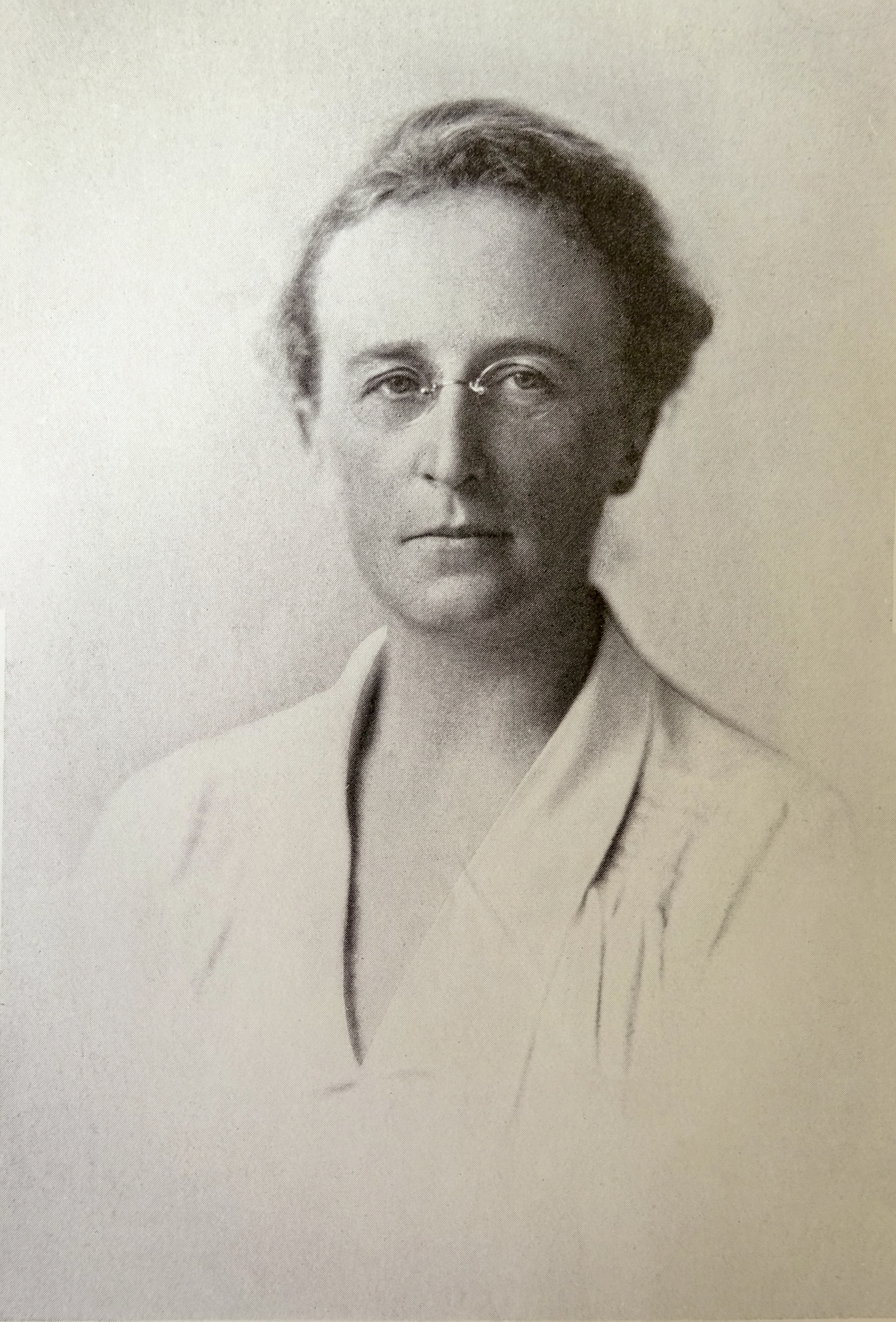
Grace Eleanor Hadow was the youngest daughter of the Rev. W. Hadow, Vicar of South Cerney. She took First Class in English at Somerville, in 1903, spent a year as Reader in English at Bryn Mawr College, Pennsylvania, was first Tutor, then Lecturer in English at Lady Margaret Hall, 1906 – 1917; Sub-Section Director in the Ministry of Munitions, and the Ministry of Labour, 1917-1920; Secretary to Barnett House (for social and economic study), 1920 – 1929; one of the founders and Vice Chairman, of the Federation of Women’s Institutes; Principal of the Home Students (Now St Anne’s College, Oxford), July 1929 – January 1940. She was also, at the same time that she was Principal, a member of the BBC Advisory Council, the National Council of Social Service, and the Adult Education Committee of the Board of Education. (Source: The Oxford Times, 1 February 1940)
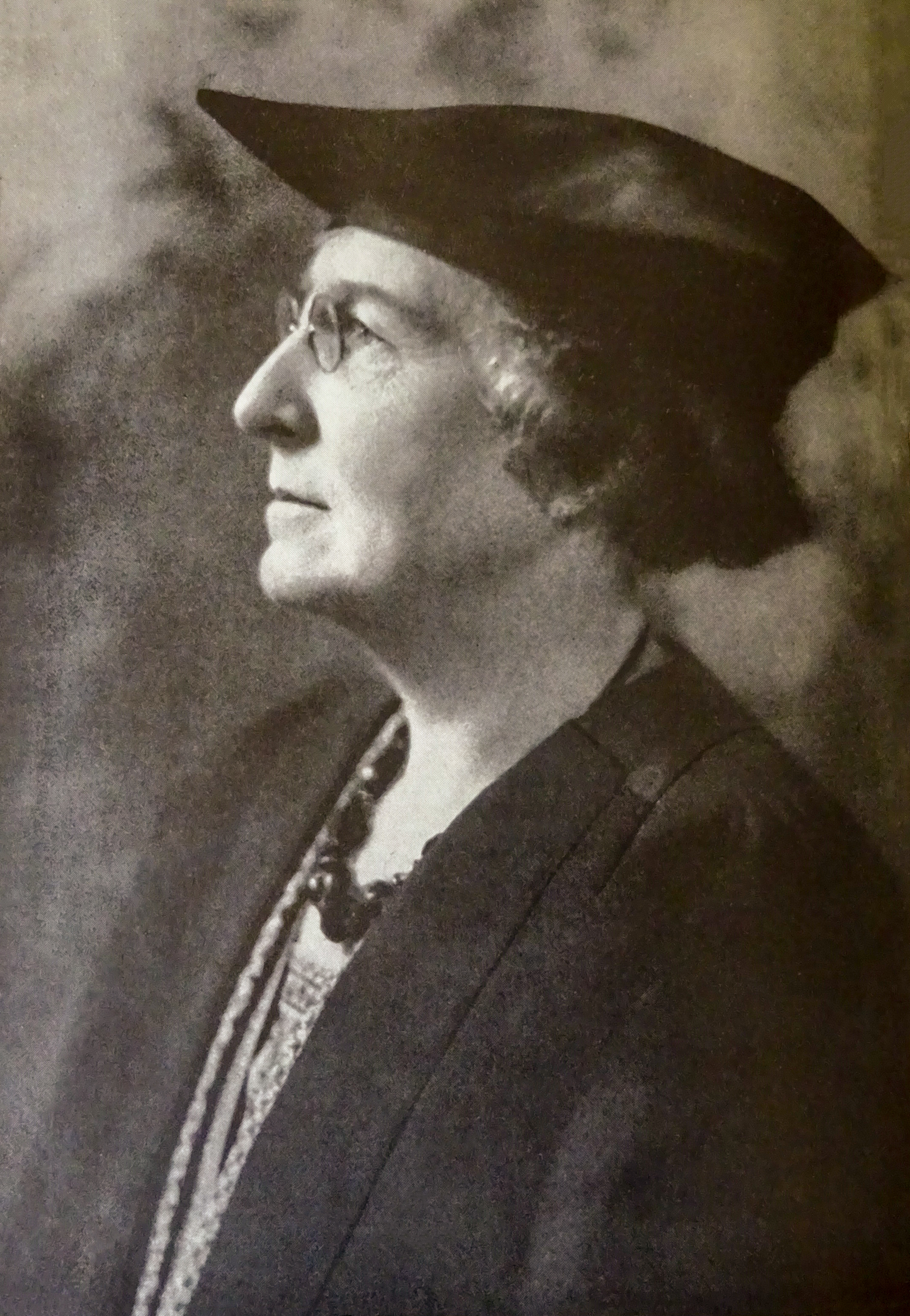
“We call to mind another picture – that of her erect dignified figure, in cap and gown, at the Terminal Service at St Mary’s. which she never missed, and which she greatly valued”. In the University, Grace Hadow was an outstanding figure. She published The Oxford Treasury of English Literature, edited with her brother, W. H. Hadow (3 vols.; 1907–8), and Chaucer and his Times (1914), in addition to her other works. She was known for “her clear and sparkling intelligence, and her many vital interests, her remarkable gifts as lecturer and speaker, her vision and determination in carrying out reforms or constructive development, her generosity and sheer creative goodness, always outgoing, never counting the cost and above all, her faith in human beings”. (Source: The Oxford Times, 1 February 1940, the Oxford Dictionary of National Biography, and ‘The Ship: The Year Book of the Society of Oxford Home Students, Old Students’ Association, No. 29’ – St Anne’s College Archives)
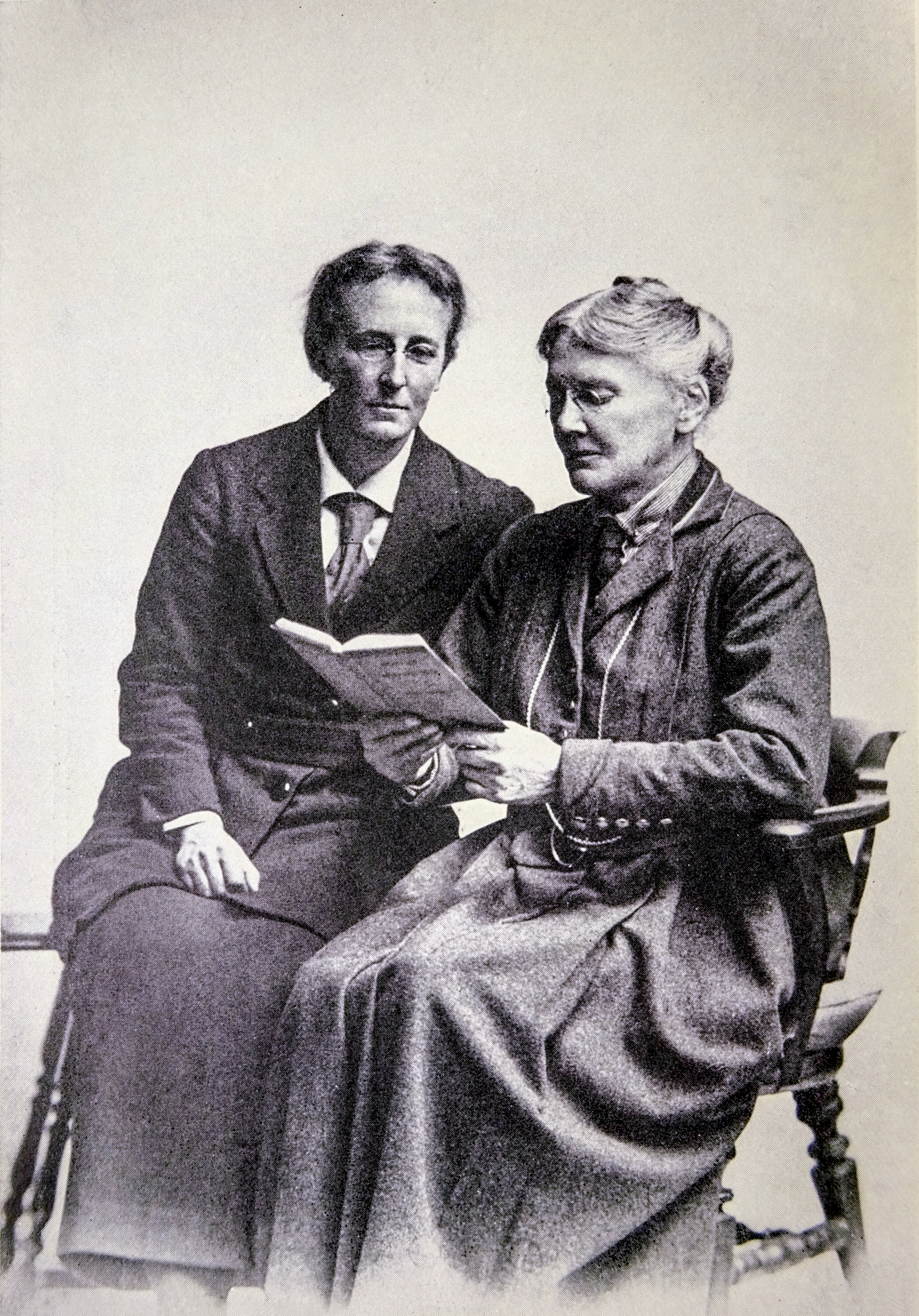
Following the death of Grace’s mother in 1917 she lived with several friends, sharing the family home of the Denekes until 1929 when she was appointed Principal. She became close friends with mother, Mrs C. S. Deneke and daughter, Helena Deneke (1878–1973). Helena was a German scholar, who studied at St Hugh’s Hall, Oxford, then still a very small society. In 1903 Helena was placed in the first class of the new honour school of English Language and Literature, and in October 1904 she became librarian of St Hugh’s, where she first taught English, changing to German and becoming tutor in German in 1909. She was Tutor in German at Lady Margaret Hall from 1913-1938 and Fellow from 1926. She helped to set up the Federation of Women’s Institutes in Oxfordshire with Grace Hadow, and wrote a biography of her life, published in 1946 by Oxford University Press. (Source: Oxford Dictionary of National Biography and ‘Grace Hadow’ by Helena Deneke)
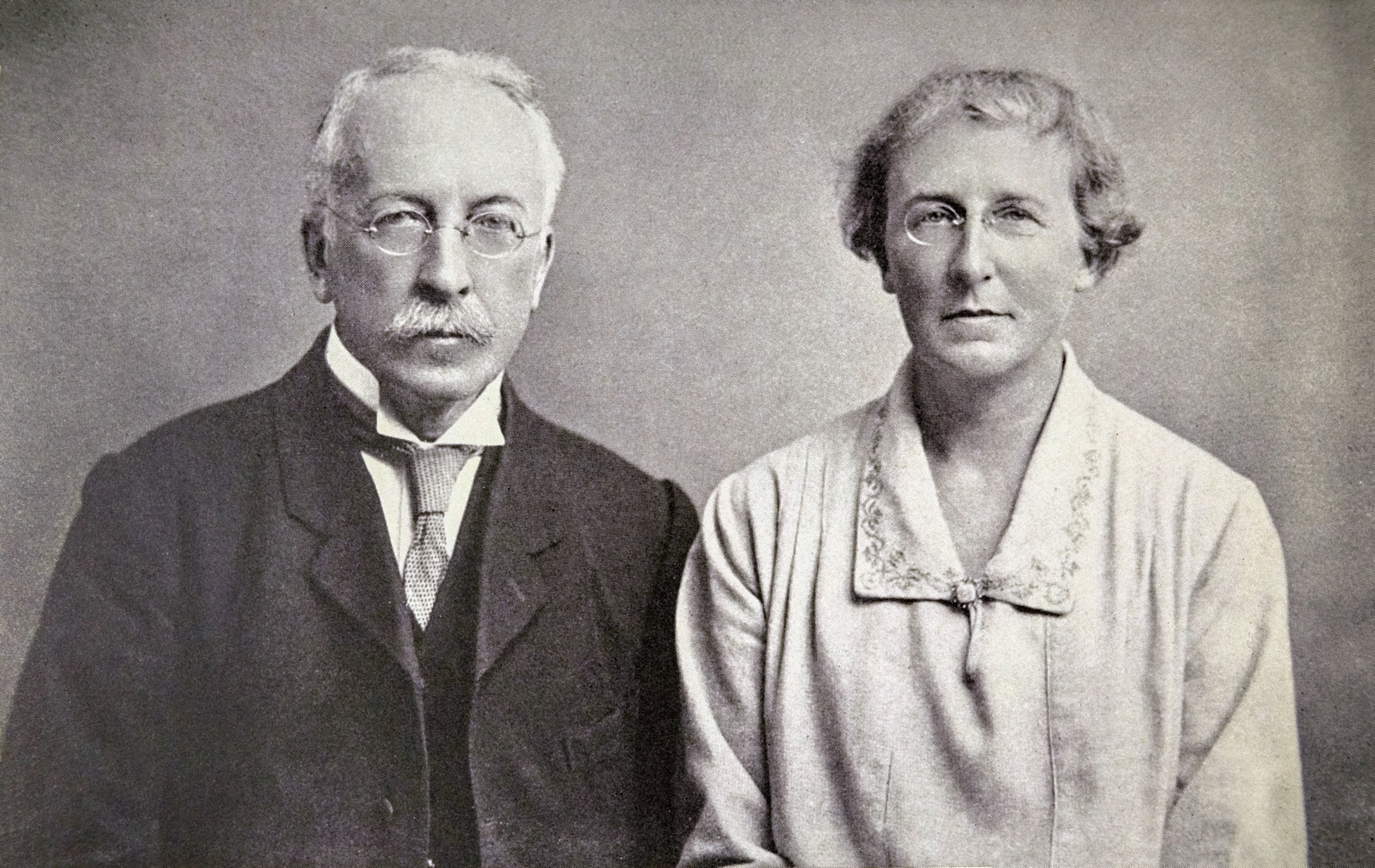
When Grace was admitted to Somerville College in October 1900, one of her supporters was her elder brother and godfather, Sir William Henry Hadow (1859– 1937), to whom she remained devoted. Sir William was a Fellow at Worcester College, and was a distinguished educationist and historian of music. He had previously been a scholar at Worcester College and later became Lecturer (1885), Fellow, Classics Tutor (1888), Dean (1889), and finally Honorary Fellow (1909). He lectured in both classics and music, became a proctor for the university (1897), and examined in the final schools of literae humaniores (1899–1901), modern languages, and English. He was widely considered a brilliant lecturer, apparently always speaking without notes (in his lectures on Aristotle, even without a text). (Source: Oxford Dictionary of National Biography)
The two following pictures are taken from a book written and illustrated by students at Somerville College in the early 1900s. Each student has been assigned an animal and text describes the characteristics of the animal. Grace Hadow, in this context, is the Gosling. The traits and behaviours detailed in the beautiful, hand-made book offer a humorous and light-hearted insight into the student described. Here, for example, Grace Hadow’s oratory and debating skills are underlined. Grace was known as a “brilliant debater, an enthusiast for drama, energetic at games, eager for causes, helpful to others, a natural leader”. Here the description of the Gosling’s love of photography and sensitive nature may offer, once again, further insights into Grace Hadow’s time as an undergraduate at Somerville College. The writer also describes the Gosling as “a migratory bird” and alludes to Grace Hadow’s trip to the United States in 1903, where she would take up a temporary teaching position at Bryn Mawr, a women’s liberal arts college in Pennsylvania. Deneke writes: “Life at Bryn Mawr did not prove altogether easy…Grace liked teaching. Her first class of about twenty freshmen is described as ‘an extremely nice set: very young but keen and intelligent, and they seem to enjoy being laughed at”. Grace was, however, critical of the Principal at the time, Miss Thomas, and her teaching methods. (Source: Somerville College Archives, and The Ship: The Year Book of the Society of Oxford Home Students, Old Students’ Association, No. 29’ – also found in St Anne’s College Archives